Pastured Pigs

Diet & Quality of life
Acorn-Finished Pasture Pork - Limited Availability
This year, we’re proud to offer something truly special.
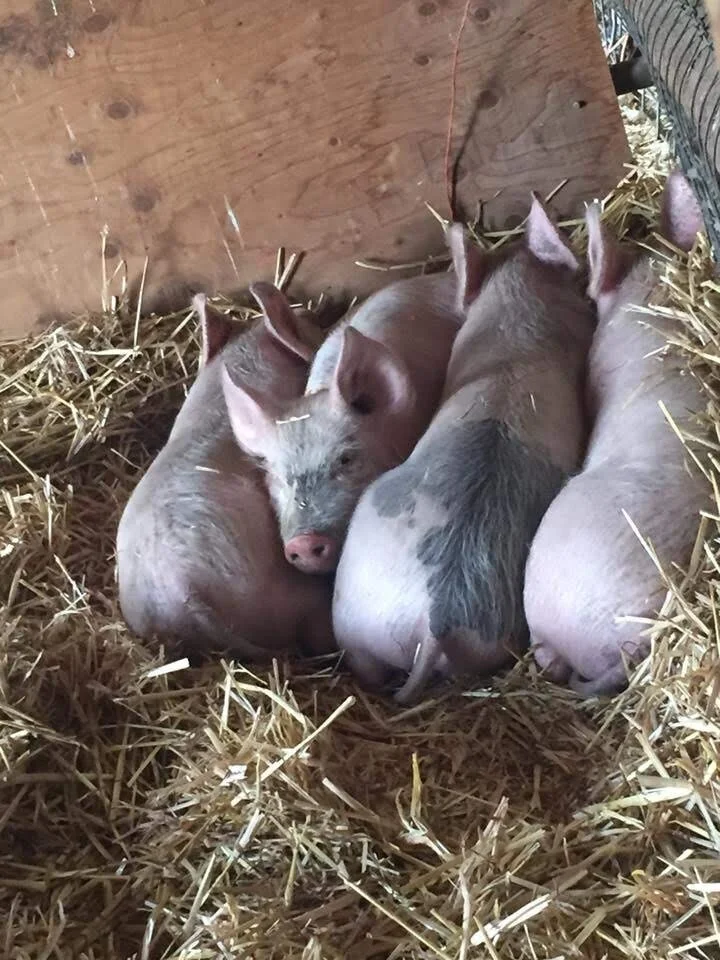
Our pigs are raised the way nature intended-rotated on open pasture in Ogden Valley using regenerative practices that prioritize soil health, animal welfare, and nutrient-dense food. To finish, they’re moved into our acorn-rich forest where they forage naturally, creating a depth of flavor you simply can’t replicate.
The result is pork that stands apart:
Deep, rich flavor with a natural sweetness
Beautiful, high-quality fat
A truly unique eating experience you’ll taste in every cut
This is slow-grown, thoughtfully raised pork, crafted for families who care about where their food comes from.

Pastured pork
Now taking deposits for 2026
Whole $850 | $200 deposit required
Half $425 | $100 deposit required
YOU WILL STILL BE RESPONSIBLE TO PAY THE BUTCHER FOR CUT & WRAP AT THE END! (When you place your custom order the price can fluctuate based on your individual requests)
All deposits are non-refundable. Deposits will be applied to the total end cost.
Ecological Benefits of Forest Finishing
Finishing pigs in a forested system is not only a feeding strategy-it’s a form of managed ecological disturbance that can improve overall ecosystem function when done intentionally.
Pigs express natural rooting and foraging behaviors that lightly disturb the soil surface. This disturbance can:
Increase soil aeration and improve water infiltration
Accelerate nutrient cycling by incorporating organic matter and distributing manure
Stimulate microbial activity critical to soil health
Reduce dense understory vegetation, helping balance plant competition and fuel loads
Their consumption of mast (acorns) and other forage also plays a role in moderating seed distribution and nutrient flow within the system.
When carefully rotated and stocked at appropriate densities, pigs can contribute to:
Improved soil structure and organic matter content
Enhanced biodiversity at the ground level
More resilient forest conditions over time
This approach draws on principles from Agroecology and Silvopasture, where livestock are integrated into perennial landscapes to create mutually beneficial relationships between animals, soil, and vegetation.
The result is a system where animal impact is not extractive, but regenerative, supporting long-term ecological function while producing nutrient-dense food.